

 Arsenal
 Manchester City
 Manchester United
 Liverpool
 Aston Villa
 Brentford
 Brighton
 Bournemouth
 Chelsea
 Fulham
 Everton
 Sunderland
 Newcastle
 Crystal Palace
 Leeds
Leeds Nottingham Forest
 West Ham
 Tottenham
 Burnley
 Wolves
 Coventry
 Ipswich
 Millwall
 Southampton
 Middlesbrough
 Hull City
 Wrexham
 Derby
Derby Norwich
 Birmingham
 Swansea
 Bristol City
 Sheffield Utd
 Preston
 QPR
QPR Watford
 Stoke City
 Portsmouth
 Charlton
 Blackburn
 West Brom
 Oxford United
 Leicester
 Sheffield Wednesday
 Lincoln
 Cardiff
 Stockport County
 Bradford
 Bolton
 Stevenage
 Luton
Luton Plymouth
 Huddersfield
 Mansfield Town
 Wycombe
 Reading
 Blackpool
 Doncaster
 Barnsley
 Wigan
Wigan Burton Albion
 Peterborough
 AFC Wimbledon
 Leyton Orient
 Exeter City
 Port Vale
 Rotherham
 Northampton
 Bromley
  Milton Keynes Dons
 Cambridge United
 Salford City
 Notts County
 Chesterfield
 Grimsby
 Barnet
 Swindon Town
 Oldham
 Crewe
Crewe Colchester
 Walsall
 Bristol Rovers
 Fleetwood Town
 Accrington ST
 Gillingham
  Cheltenham
 Shrewsbury
 Newport County
 Tranmere
 Crawley Town
 Harrogate Town
 Barrow
 York
York Rochdale
 Carlisle
 Boreham Wood
 Scunthorpe
 Southend
 Forest Green
 FC Halifax Town
 Hartlepool
 Woking
 Tamworth
 Boston United
 Altrincham
 Solihull Moors
 Wealdstone
 Yeovil Town
 Eastleigh
 Gateshead
 Sutton Utd
 Aldershot Town
 Brackley Town
 Morecambe
 Braintree
 Truro City
 AFC Fylde
 South Shields
 Kidderminster Harriers
 Macclesfield
 Buxton
 Scarborough Athletic
 Chester
 Merthyr Town
 Darlington 1883
 Spennymoor Town
 AFC Telford United
 Marine
 Radcliffe
 Southport
 Chorley
 Worksop Town
 Oxford City
 Bedford Town
 King's Lynn Town
 Hereford
 Curzon Ashton
 Alfreton Town
 Peterborough Sports
 Leamington
 Worthing
 AFC Hornchurch
 Torquay
 Dorking Wanderers
 Hemel Hempstead Town
 Weston-super-Mare
 Maidenhead
 Maidstone Utd
  Ebbsfleet United
  Chelmsford City
 Chesham United
 AFC Totton
 Dagenham & Redbridge
 Tonbridge Angels
  Horsham
 Slough Town
 Salisbury
 Hampton & Richmond
 Farnborough
 Dover
Dover  Bath City
 Chippenham Town
 Enfield Town
 Eastbourne Borough
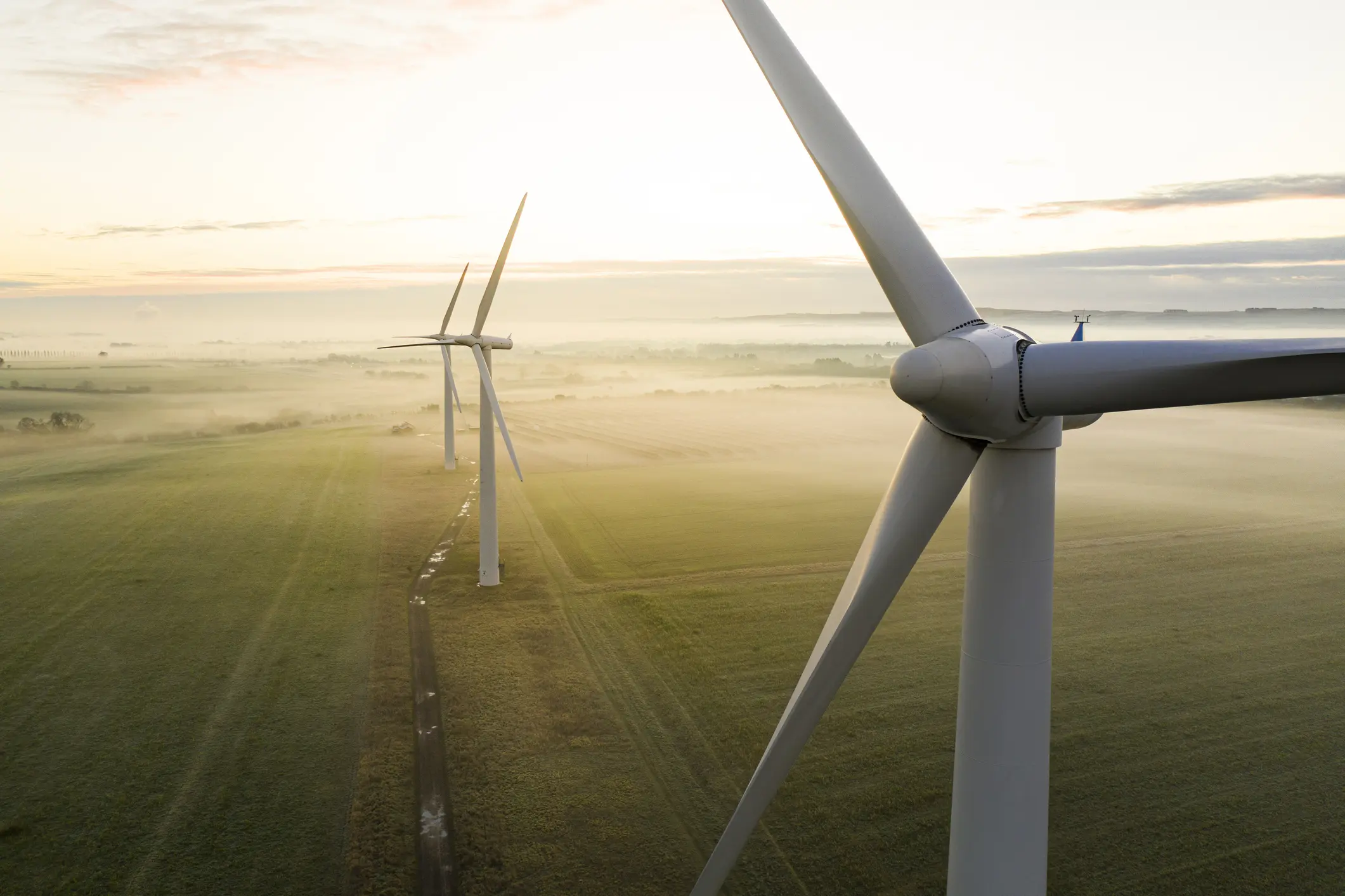
A Kent family of four now spends over 1,750 pounds a year on household energy. In Texas, the same energy use would cost under 1,000 pounds. In Beijing, around 400. Why does Britain — a nation sitting on oil, gas, wind, and nuclear capability — charge its own people some of the highest energy prices on the planet?
Open your electricity bill. Look at the number. Now ask yourself: why is it so high?
It is not because Britain lacks energy resources. We have oil and gas beneath the North Sea. We have some of the strongest, most consistent winds anywhere in Europe. We built the world’s first commercial nuclear power station at Calder Hall in 1956. And yet, somehow, British households and businesses are paying more per kilowatt-hour than consumers in the United States, China, India, France, and most of the rest of the developed world.
Something has gone badly wrong. And the explanation has almost nothing to do with physics or geography. It is about money, politics, and a market structure that virtually guarantees high prices regardless of how cheaply we can actually generate power.
This is the first of four articles investigating what is really driving Britain’s energy costs — and, more importantly, who profits from keeping them high.
What Does Energy Actually Cost to Produce?
Politicians and lobbyists love to throw around a figure called the Levelized Cost of Energy — LCOE for short. It sounds technical. It sounds definitive. And it is routinely used to make whichever energy source the speaker prefers look like the obvious winner.
Here is what the raw generation cost numbers actually look like, according to Lazard’s latest analysis and the IEA:
| Energy Source | LCOE Range ($/MWh) | UK Typical ($/MWh) |
|---|---|---|
| Onshore Wind | $24 — $75 | $46 |
| Offshore Wind | $72 — $140 | $119 |
| Solar PV (Utility) | $20 — $77 | $65 |
| Natural Gas (CCGT) | $39 — $101 | $75 |
| Nuclear (New Build) | $141 — $221 | $195 (Hinkley C) |
| Coal | $65 — $152 | N/A (phased out) |
Sources: Lazard LCOE Analysis v17 (2025), DESNZ, IEA World Energy Outlook 2025
Glance at that table and you might think the answer is obvious: build more wind and solar, they are the cheapest. But those numbers are — to put it politely — incomplete. They measure only the cost of generating electricity at the source. They say nothing about what it takes to actually deliver that electricity reliably to your home.
The Costs That Never Appear on the Brochure
Wind and solar have a fundamental problem that LCOE figures conveniently ignore. They only work when the wind blows or the sun shines. When they don’t — and in Britain, that happens a lot — something else has to fill the gap. Gas plants sit idle, burning money just to be ready. Batteries that don’t yet exist at the scale needed would cost billions. And when it’s too windy? We actually pay wind farms to stop generating.
That last point deserves repeating. In 2024, the UK paid over one billion pounds in total constraint costs — payments made to generators either to stop producing electricity or to fire up reserve capacity because the grid could not balance supply and demand. Over one billion pounds. To not generate power.
Nuclear numbers are misleading too, but in the opposite direction. You’ll hear people quote $25 to $35 per MWh for nuclear — but that’s the running cost of plants that already exist and have been paid for. Try building a new one. Hinkley Point C has a strike price of 92.50 pounds per MWh in 2012 money, which inflation has now pushed above 120 pounds. Lazard puts the realistic all-in cost for new nuclear — construction, financing, running, decommissioning, waste — at $141 to $221 per MWh. And Britain’s nuclear legacy costs? Already north of 300 billion pounds, picked up by the taxpayer, invisible in any LCOE calculation.
So What Do People Actually Pay?
Enough theory. Here is what households and businesses are actually charged across the world’s major economies right now:
| Country | Household Price (p/kWh) | Industrial Price (p/kWh) | Primary Energy Mix |
|---|---|---|---|
| United Kingdom | 27.0 | 19.2 | Gas 38%, Wind 29%, Nuclear 15% |
| Germany | 32.1 | 18.5 | Wind 27%, Coal 26%, Gas 15% |
| France | 24.0 | 12.8 | Nuclear 65%, Hydro 13%, Wind 10% |
| United States | 14.5 | 6.3 | Gas 43%, Nuclear 18%, Wind 12% |
| China | 7.8 | 5.1 | Coal 60%, Hydro 16%, Wind 9% |
| India | 5.9 | 6.5 | Coal 74%, Solar 7%, Hydro 6% |
| Saudi Arabia | 3.2 | 2.1 | Gas 57%, Oil 40%, Solar 3% |
| Russia | 2.8 | 3.4 | Gas 47%, Nuclear 20%, Hydro 17% |
Sources: IEA, Eurostat, DESNZ, national energy agencies. Prices converted at 2025 average exchange rates
Look at those numbers carefully. A British household pays nearly twice what an American family pays. More than three times the Chinese rate. Almost ten times what consumers in Russia or Saudi Arabia are charged. Only Germany comes close to matching our prices — and even there, industrial users now pay less than ours thanks to targeted exemptions we haven’t bothered to match.
France is the one that should really sting. Same continent. Similar standard of living. But their nuclear-heavy grid delivers electricity at roughly 11 per cent less than we pay. Whatever you think about nuclear power’s construction headaches, the French model proves one thing beyond argument: a baseload nuclear grid gives consumers cheaper power than our gas-dependent, wind-supplemented muddle.
Four Reasons Britain Pays Through the Nose
We are hooked on gas prices. Even with all those wind turbines spinning, natural gas still sets the electricity price for most of the day. And Britain has run down its gas storage to a negligible 6 per cent of annual demand. Germany stores 27 per cent. France, 30 per cent. We are one cold winter or one pipeline disruption away from a price spike, every single year.
A significant slice of your bill is policy costs. Green levies. The Warm Home Discount. Supplier obligations. Network charges for connecting remote wind farms. Add it all up and roughly 13 per cent of a household electricity bill goes on things that aren’t actually electricity. These costs hit poorer households hardest — a classic regressive tax dressed up as environmental responsibility.
The market itself is rigged against consumers. Here’s something most people don’t know: the UK electricity market prices all generation at the cost of the most expensive plant running at any given moment. Usually gas. So even when wind is generating at essentially zero marginal cost, you still pay the gas price. A proposed reform called REMA is supposed to fix this. It remains years away.
The infrastructure bill is enormous. Connecting offshore wind farms means laying billions of pounds worth of subsea cables. National Grid estimates the grid transformation will cost 58 billion pounds over the next decade. Guess who pays? You do.
What This Is Doing to British Industry
Expensive energy isn’t just an annoyance when the bill lands on your doormat. It is killing British manufacturing. Slowly, quietly, and — unless something changes — permanently.
Take Port Talbot, Britain’s biggest steelworks. Their electricity costs are roughly three times what a competing Chinese mill pays. The outcome writes itself: production goes abroad, the jobs go with it, and we end up importing the same steel — plus the carbon emissions from making it — from countries that couldn’t care less about our environmental standards.
Kent feels this directly. The county still has food processing, agriculture relying on heated greenhouses and cold storage, small manufacturers clinging on. Every penny added to the kilowatt-hour price chips away at their margins. Every price rise makes it a little harder for a Kent business to compete against someone in Shanghai or Houston who pays a fraction of what we do.
The Question That Nobody Wants to Ask
The energy debate in Britain has become stuck. One side says: more renewables, faster. The other side says: bring back fossil fuels. Both miss what matters most.
Not “which is cleaner?” or even “which is cheaper?” The real question is: who benefits?
Build a gas power station and you buy turbines from competing international manufacturers. You buy fuel from global commodity markets where dozens of countries compete to supply you. No single nation has you over a barrel.
Build a wind farm and the picture looks very different. The turbines? Overwhelmingly manufactured in China. The rare earth minerals in the magnets? Chinese-controlled. The processed steel? Chinese-dominated. The supply chain from raw material to finished turbine? One country holds nearly every link.
That isn’t a shift from dirty energy to clean energy. It is a shift in who holds the power — not electrical power, but strategic power over nations that depend on imported technology for their most basic infrastructure.
In Part 2, we put hard numbers on exactly what that shift means. Two scenarios, eight countries, fifty years. The results are not what the green energy lobby would like you to see.
The Price of Power
8 questions
Key Takeaways
- British households pay nearly twice the US rate and over three times the Chinese rate for electricity
- LCOE figures routinely exclude system costs — grid upgrades, backup generation, curtailment payments, storage
- New nuclear really costs $141-221/MWh all-in, not the $25-35 operating figure often quoted
- 13% of your household bill is policy levies, not electricity
- UK gas storage sits at a dangerously low 6% of annual demand — among the worst in Europe
- The electricity market charges gas prices even when wind is generating cheaply
- High energy costs are pushing British manufacturing abroad, taking jobs and tax revenue with it
What This Means for Kent Residents
Kent’s farmers, food processors, and remaining manufacturers all compete against international rivals who pay a fraction of our energy costs. Higher electricity prices feed straight through to higher prices in local shops, less investment in local businesses, and wages that can’t keep pace. Understanding why we pay so much — and who pockets the difference — is where any serious demand for change has to start. The next three parts of this investigation follow the money to its source.
Sources: Lazard Levelized Cost of Energy Analysis v17.0 (2025), International Energy Agency World Energy Outlook 2025, UK Department for Energy Security and Net Zero (DESNZ), Eurostat Energy Statistics, National Grid ESO Future Energy Scenarios, Ofgem State of the Energy Market 2025, UK Nuclear Decommissioning Authority Annual Report.
Next: Part 2 — “Green or Fossil — Who Wins the Energy Revolution?” puts hard numbers on what happens to global power under two extreme scenarios.