

 Arsenal
 Manchester City
 Manchester United
 Liverpool
 Aston Villa
 Brentford
 Brighton
 Bournemouth
 Chelsea
 Fulham
 Everton
 Sunderland
 Newcastle
 Crystal Palace
 Leeds
Leeds Nottingham Forest
 West Ham
 Tottenham
 Burnley
 Wolves
 Coventry
 Ipswich
 Millwall
 Southampton
 Middlesbrough
 Hull City
 Wrexham
 Derby
Derby Norwich
 Birmingham
 Swansea
 Bristol City
 Sheffield Utd
 Preston
 QPR
QPR Watford
 Stoke City
 Portsmouth
 Charlton
 Blackburn
 West Brom
 Oxford United
 Leicester
 Sheffield Wednesday
 Lincoln
 Cardiff
 Stockport County
 Bradford
 Bolton
 Stevenage
 Luton
Luton Plymouth
 Huddersfield
 Mansfield Town
 Wycombe
 Reading
 Blackpool
 Doncaster
 Barnsley
 Wigan
Wigan Burton Albion
 Peterborough
 AFC Wimbledon
 Leyton Orient
 Exeter City
 Port Vale
 Rotherham
 Northampton
 Bromley
  Milton Keynes Dons
 Cambridge United
 Salford City
 Notts County
 Chesterfield
 Grimsby
 Barnet
 Swindon Town
 Oldham
 Crewe
Crewe Colchester
 Walsall
 Bristol Rovers
 Fleetwood Town
 Accrington ST
 Gillingham
  Cheltenham
 Shrewsbury
 Newport County
 Tranmere
 Crawley Town
 Harrogate Town
 Barrow
 York
York Rochdale
 Carlisle
 Boreham Wood
 Scunthorpe
 Southend
 Forest Green
 FC Halifax Town
 Hartlepool
 Woking
 Tamworth
 Boston United
 Altrincham
 Solihull Moors
 Wealdstone
 Yeovil Town
 Eastleigh
 Gateshead
 Sutton Utd
 Aldershot Town
 Brackley Town
 Morecambe
 Braintree
 Truro City
 AFC Fylde
 South Shields
 Kidderminster Harriers
 Macclesfield
 Buxton
 Scarborough Athletic
 Chester
 Merthyr Town
 Darlington 1883
 Spennymoor Town
 AFC Telford United
 Marine
 Radcliffe
 Southport
 Chorley
 Worksop Town
 Oxford City
 Bedford Town
 King's Lynn Town
 Hereford
 Curzon Ashton
 Alfreton Town
 Peterborough Sports
 Leamington
 Worthing
 AFC Hornchurch
 Torquay
 Dorking Wanderers
 Hemel Hempstead Town
 Weston-super-Mare
 Maidenhead
 Maidstone Utd
  Ebbsfleet United
  Chelmsford City
 Chesham United
 AFC Totton
 Dagenham & Redbridge
 Tonbridge Angels
  Horsham
 Slough Town
 Salisbury
 Hampton & Richmond
 Farnborough
 Dover
Dover  Bath City
 Chippenham Town
 Enfield Town
 Eastbourne Borough
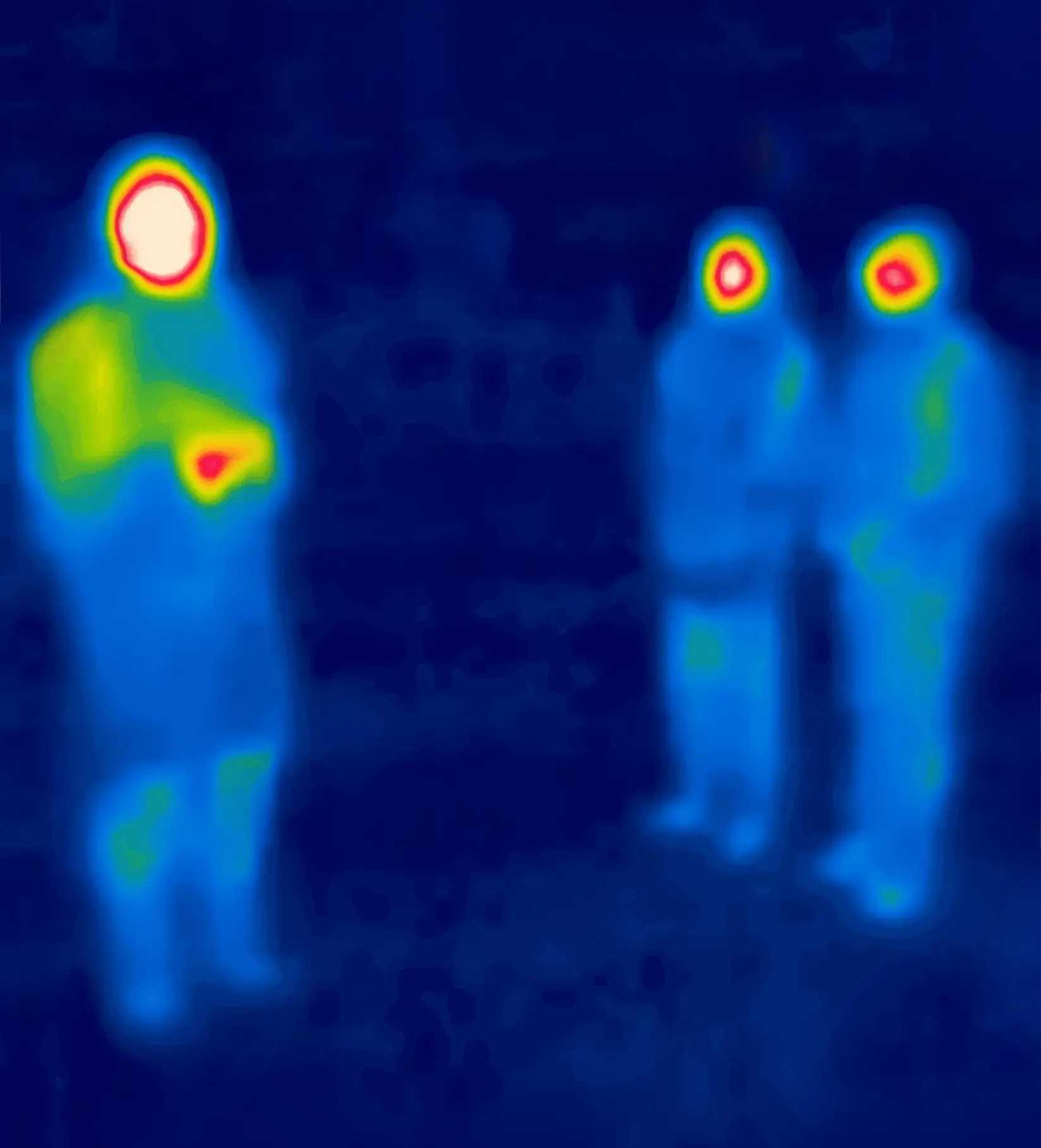
Published IEEE 802.11bf standard enables Wi-Fi routers to function as motion sensors, with 2026 commercial pilots expected in smart buildings, security, and elder care.
A new wireless networking standard published by the IEEE in September 2025 has formally established the technical framework for turning ordinary Wi-Fi routers into motion-sensing devices — and industry analysts expect the first commercial products to reach homes and businesses across the UK during 2026.
The standard, IEEE 802.11bf, passed its final ballot with 98 per cent approval and defines how existing Wi-Fi hardware can be used to detect movement, monitor room occupancy, and support applications ranging from automated lighting to elder-care monitoring.
How Wi-Fi Sensing Works
Wi-Fi sensing operates by analysing how radio signals change when a person or object moves through the space between a router and its connected devices. These disruptions, measured as channel state information, create patterns that software can interpret to determine whether someone has entered a room, walked through a hallway, or left a building.
Unlike traditional security cameras, the technology functions in complete darkness and can detect movement through walls. It requires no additional hardware — only a software update to compatible routers.
From Lab to Living Room
Until recently, Wi-Fi sensing was available only through proprietary solutions from individual manufacturers, which limited adoption. The publication of 802.11bf changes that by creating a common standard that any router maker can implement.
Industry forecasts for 2026 point to early commercial pilots in smart buildings, home security systems, energy management, and healthcare settings. Infrastructure vendors are expected to offer sensing as a software feature layered on top of existing wireless networks, with potential cost savings for heating, lighting, and building management.
Research Points to Individual Identification
Beyond basic motion detection, researchers are exploring whether Wi-Fi signals can identify specific individuals. A July 2025 preprint from La Sapienza University of Rome described a system called WhoFi, developed by researchers Danilo Avola, Daniele Pannone, Dario Montagnini, and Emad Emam. Using transformer-based deep learning models to analyse how different bodies distort Wi-Fi signals, the system achieved 95.5 per cent identification accuracy on the NTU-Fi benchmark dataset.
The research, published on arXiv and not yet formally peer-reviewed, used standard TP-Link N750 routers rather than specialist equipment. However, the authors tested only 14 subjects under controlled laboratory conditions — real-world performance in homes with varying layouts, furniture, and interference from multiple devices would likely be lower.
Person identification through Wi-Fi should therefore be regarded as an early-stage research capability rather than a feature available in consumer products.
Privacy Concerns
Privacy researchers have flagged that Wi-Fi sensing provides no visible indication that monitoring is taking place. Unlike cameras, it operates passively and can function without the knowledge of the people being observed.
The WhoFi researchers themselves noted the need for ethical and legal frameworks to govern deployment, particularly given that the technology does not require subjects to carry a device or interact with any hardware. Questions around data storage, consent, and third-party data sharing remain unresolved as the technology moves toward commercial availability.
Key Takeaways
- IEEE 802.11bf, published September 2025, formally standardises Wi-Fi sensing for motion detection and occupancy monitoring
- Commercial pilots are expected during 2026 in smart buildings, security, elder care, and energy management
- La Sapienza University researchers demonstrated 95.5 per cent individual identification accuracy in lab conditions using standard routers
- Individual identification remains experimental and has not been demonstrated at scale in real-world environments
- Privacy frameworks have not yet caught up with the technology
What This Means for Kent Residents
As Wi-Fi sensing features begin appearing in new routers and smart home products sold across Kent, residents should check whether their devices include sensing capabilities and review manufacturer privacy policies. It is worth understanding whether any collected data stays on your local network or is transmitted to external servers. The National Institute of Standards and Technology has published research on the standard, and the IEEE documentation is publicly available for those who want to understand what the technology can and cannot do.
Sources
- IEEE Standards Association — IEEE 802.11bf-2025
- arXiv — WhoFi: Deep Person Re-Identification via Wi-Fi Channel Signal Encoding (Avola et al., 2025)
- NIST — IEEE 802.11bf: Enabling the Widespread Adoption of Wi-Fi Sensing
- TechXplore — WhoFi: New Surveillance Technology Can Track People by How They Disrupt Wi-Fi Signals
- IEEE 802.11 Task Group BF — WLAN Sensing Updates