

 Arsenal
 Manchester City
 Manchester United
 Liverpool
 Aston Villa
 Bournemouth
 Brentford
 Brighton
 Chelsea
 Fulham
 Everton
 Sunderland
 Newcastle
 Leeds
Leeds Crystal Palace
 Nottingham Forest
 Tottenham
 West Ham
 Burnley
 Wolves
 Coventry
 Ipswich
 Millwall
 Southampton
 Middlesbrough
 Hull City
 Wrexham
 Derby
Derby Norwich
 Birmingham
 Swansea
 Bristol City
 Sheffield Utd
 Preston
 QPR
QPR Watford
 Stoke City
 Portsmouth
 Charlton
 Blackburn
 West Brom
 Oxford United
 Leicester
 Sheffield Wednesday
 Lincoln
 Cardiff
 Stockport County
 Bradford
 Bolton
 Stevenage
 Luton
Luton Plymouth
 Huddersfield
 Mansfield Town
 Wycombe
 Reading
 Blackpool
 Doncaster
 Barnsley
 Wigan
Wigan Burton Albion
 Peterborough
 AFC Wimbledon
 Leyton Orient
 Exeter City
 Port Vale
 Rotherham
 Northampton
 Bromley
  Milton Keynes Dons
 Cambridge United
 Salford City
 Notts County
 Chesterfield
 Grimsby
 Barnet
 Swindon Town
 Oldham
 Crewe
Crewe Colchester
 Walsall
 Bristol Rovers
 Fleetwood Town
 Accrington ST
 Gillingham
  Cheltenham
 Shrewsbury
 Newport County
 Tranmere
 Crawley Town
 Harrogate Town
 Barrow
 York
York Rochdale
 Carlisle
 Boreham Wood
 Scunthorpe
 Southend
 Forest Green
 FC Halifax Town
 Hartlepool
 Woking
 Tamworth
 Boston United
 Altrincham
 Solihull Moors
 Wealdstone
 Yeovil Town
 Eastleigh
 Gateshead
 Sutton Utd
 Aldershot Town
 Brackley Town
 Morecambe
 Braintree
 Truro City
 AFC Fylde
 South Shields
 Kidderminster Harriers
 Macclesfield
 Buxton
 Scarborough Athletic
 Chester
 Merthyr Town
 Darlington 1883
 Spennymoor Town
 AFC Telford United
 Marine
 Radcliffe
 Southport
 Chorley
 Worksop Town
 Oxford City
 Bedford Town
 King's Lynn Town
 Hereford
 Curzon Ashton
 Alfreton Town
 Peterborough Sports
 Leamington
 Worthing
 AFC Hornchurch
 Torquay
 Dorking Wanderers
 Hemel Hempstead Town
 Weston-super-Mare
 Maidenhead
 Maidstone Utd
  Ebbsfleet United
  Chelmsford City
 Chesham United
 AFC Totton
 Dagenham & Redbridge
 Tonbridge Angels
  Horsham
 Slough Town
 Salisbury
 Hampton & Richmond
 Farnborough
 Dover
Dover  Bath City
 Chippenham Town
 Enfield Town
 Eastbourne Borough
Ninety-seven per cent of monitored water bodies in the Medway basin, and one hundred per cent of those in the Stour, now fail the legal definition of “Good” ecological status. Eleven named Kent treatment works are at risk of breaching their dry-weather-flow consents under planned growth. South East Water has formally told Tonbridge & Malling that it can supply potable water for 6,318 of the 19,620 homes the council is mandated to deliver by 2040. Kent’s water and sewage networks have reached a point of regulator-documented strain — and the financial cost is now being passed to billpayers.
This is the first of a five-part Kent Local News investigation into the capacity of the county’s water supply, wastewater treatment, and chalk-stream environments to support the level of growth currently planned for the region. Subsequent parts examine the housing-capacity gap, the demographic engine driving demand, the cumulative environmental impact, and the proposals being put forward by the ten political parties active in Kent. Each part publishes Mondays and Thursdays through May, with the multi-party survey on 1 June.
The numbers behind the language
The Water Framework Directive — retained in UK law after EU exit and enforced by the Environment Agency — classifies surface water bodies on a five-band scale from High to Bad. To register a passing “Good” status, a water body must meet ecological, chemical, and hydrological tests simultaneously. Across England, only 14% of monitored bodies achieved “Good” or better in the Environment Agency’s most recent classification cycle.
In Kent, the picture is materially worse than the national average. The Environment Agency’s published basin-level data records that of the monitored water bodies in the Medway catchment, 97% fail the “Good” test. In the Stour, the figure is 100%. The Darent, the Medway’s western tributary system, and the Cray show comparable failures. (Sources: Environment Agency Catchment Data Explorer, current WFD cycle; Defra State of the Environment 2024.)
These are not abstract statistical artefacts. They are the regulatory underpinning for everything that follows: the housing-permission blockages, the bathing-water restrictions, and the cost recovery now being added to consumer water bills.
A regulator at the limit of its tools
The Environment Agency’s enforcement record across the South East has expanded sharply since 2023. Ofwat’s August 2024 enforcement package levied a combined £168 million in proposed penalties against Thames Water, Yorkshire Water and Northumbrian Water for storm-overflow performance failures. Southern Water, the dominant wastewater operator across Kent, completed its parallel 2019 enforcement process in February 2026 having paid £126 million in redress and penalties — but Ofwat’s closing assessment recorded that the company “needs to go further in areas that were not a focus of the previous investigation” and required an additional £13.5 million of shareholder-funded work to 2030. (Sources: Ofwat enforcement notices, 2023–2026; Ofwat 2019 investigation closure statement, February 2026.)
Penalties at this scale are unusual. They reflect not merely regulatory dissatisfaction but the practical reality that the agency’s primary lever — permit refusal and enforcement undertakings — is now being used at the upper boundary of its statutory range. Where additional regulatory tightening is unavailable, the only remaining variable is the load placed on the system: the volume of sewage entering the treatment works, and the volume of freshwater being abstracted from already-stressed sources.
The chalk-stream collapse
Kent contains a substantial share of the world’s chalk-stream habitat — a geological resource concentrated in southern England and almost nowhere else on earth. The Darent, the Cray, the Nailbourne, the Petteridge Brook and the Eden are part of an ecosystem of fewer than 220 such streams worldwide.
The Environment Agency’s 2024 chalk-stream summary records that the Darent’s ecological flow has been classified as compromised by abstraction at multiple points along its course. The Nailbourne — an intermittent winterbourne by design — has on several occasions in the past decade failed to flow even in winter, a pattern more usually associated with summer drought. The cumulative loss of chalk-stream habitat across Kent now exceeds the cumulative loss recorded across any other English county.
This matters in regulatory terms because chalk-stream classifications carry weight under the Habitats Regulations and the WFD jointly. A failing chalk stream is harder to remediate than a failing river of comparable size, and consents tied to its catchment are correspondingly more constrained.
Sewage by the count
The Environment Agency’s storm-overflow event database, made fully public from 2023, recorded a national total of 3.61 million hours of untreated sewage discharge into English waters in 2023. Southern Water’s share of that figure was 317,000 hours, or 8.8% of the country’s entire spillage volume on a network serving 4.7 million people. The Environment Agency’s 2024 EDM annual returns, published in March 2025 across a now-complete 14,254-overflow monitoring network, recorded a further 0.2% increase in spill duration nationally — an “all-time high” in the regulator’s own characterisation. (Sources: Environment Agency Event Duration Monitoring data, 2024 release; EA 2024 EDM Annual Returns, March 2025.)
Within Kent, the worst-performing storm overflow assets recorded individual annual spill durations exceeding 8,000 hours — close to the maximum physically possible — with multiple sites in the Medway and Stour catchments registering spill counts in the hundreds. Ofwat’s subsequent enforcement notice characterised Southern Water’s performance as showing “serious failures” in the operation, maintenance, and management of its wastewater network.
The bathing-water inheritance
The Environment Agency classified Dymchurch as Poor under the 2024 bathing-water classifications, the lowest of the four available bands and a status that triggers a statutory advice-against-bathing notice for the season. Dymchurch joins a pattern of Kent coastal locations where bathing-water classifications have moved adversely in successive years, with both Southern Water’s wastewater treatment and agricultural runoff identified as contributing pressures. (Source: Environment Agency Bathing Water Classifications, 2024.)
Public-health risk from bathing-water exposure is regulated under the Bathing Water Regulations 2013. A Poor classification does not by itself close a beach, but it requires the local authority to display warning signage and the Environment Agency to publish source-attribution analysis. The cost of remediation falls jointly on the water operator and on whichever public-sector or agricultural source is identified as a contributor.
Eleven works, one warning
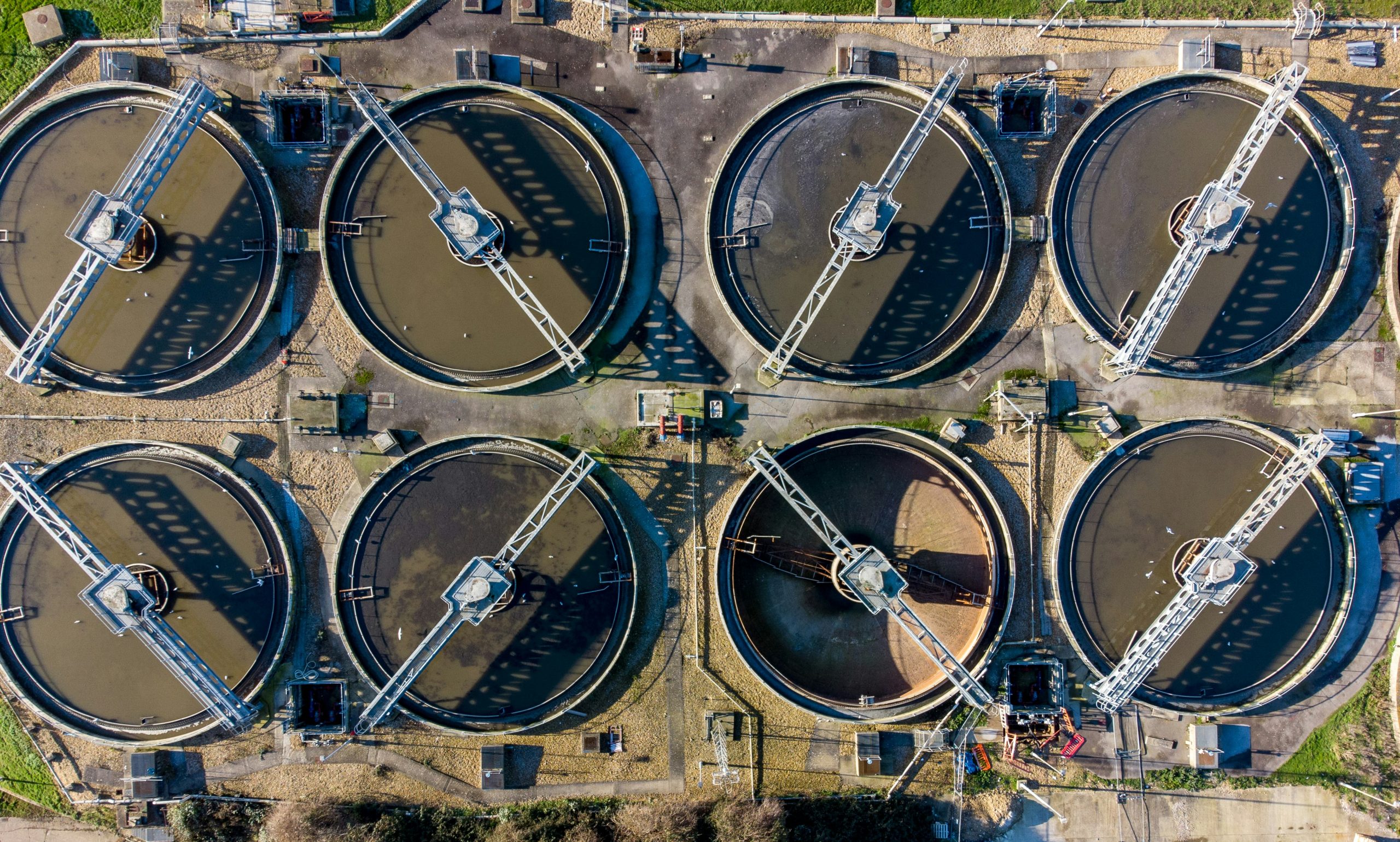
Southern Water’s Drainage and Wastewater Management Plan, finalised in 2024 and submitted to Ofwat as part of the AMP8 settlement, identifies eleven named Kent wastewater treatment works at risk of dry-weather-flow non-compliance under the level of growth currently planned for the county. The named sites include Motney Hill (serving Medway and parts of Swale), Aylesford (serving Maidstone catchment), Tonbridge (serving the Tonbridge & Malling growth corridor), and both of the wastewater treatment works serving Royal Tunbridge Wells.
The DWMP’s technical appendices identify a further series of works whose dry-weather flow is projected to exceed permitted limits within the AMP8 horizon (2025–2030). Where the DWF threshold is breached, the operator’s discharge consent becomes incompatible with the works’ operation, and either capacity must be added, growth in the catchment must be paused, or both. (Source: Southern Water Drainage and Wastewater Management Plan, 2024.)
This is the structural mechanism by which water infrastructure now constrains housing supply: not because permits cannot be granted in principle, but because the catchment-scale arithmetic stops working before the legal limits are reached.
What Stodmarsh actually means — and the late-April unwinding
The Stodmarsh National Nature Reserve, north-east of Canterbury, has been the most prominent single example of this catchment-scale arithmetic in operation. Following Natural England’s 2020 advice that nutrient-loading at the wastewater treatment works in the Stour catchment was incompatible with the reserve’s consent limits, planning permissions in the affected catchment were placed under a nutrient-neutrality requirement, blocking 7,145 homes across the Kent and Medway planning authorities by March 2025 (Kent County Council planning monitoring brief, March 2025).
That position changed materially on 24 April 2026, when Natural England approved the Stodmarsh Stream Enhancement Scheme — an offset programme delivered by Greenshank Environmental in partnership with Dace Environmental, restoring 2.5 kilometres of heavily-managed agricultural ditches across five sites into more natural streams that filter nitrogen and phosphorus before they reach the Stour. The scheme’s first phase is expected to release sufficient nutrient credits to unlock between 3,000 and 5,000 homes across Ashford, Canterbury and the wider Stour catchment; a second phase would extend total capacity to 8,000 homes. The work is secured for more than 80 years. (Sources: Ashford Borough Council news release, 24 April 2026; Greenshank Environmental scheme documentation, April 2026.)
The scheme’s approval is significant but partial. Greenshank’s own published figures put the national backlog of homes delayed by nutrient-neutrality rules at more than 160,000 — meaning Stodmarsh, even fully resolved, accounts for roughly 5% of the national total. Within Kent, the Stodmarsh constraint is the largest but not the only one of its kind: the Pevensey Levels constraint affects parts of east Kent and the Solent constraint affects catchments draining further west. And the Stodmarsh scheme itself is operationally untested at scale — the credits will be issued through a developer-facing online platform, but no homes have yet been issued planning permission against the new credits as of publication.
Where the money has gone — and where it has not
Ofwat’s December 2024 final determination on the AMP8 price review settled allowed water-company expenditure for the 2025–2030 regulatory period at a level that translates to consumer bill increases averaging £157 (36% in real terms) across England and Wales over five years, or approximately £31 per household per year before inflation. Southern Water’s settled rise was 53% — the highest of any water company in England and Wales. The company had originally requested an 83% rise. (Sources: Ofwat PR24 final determination, December 2024; The Isle of Thanet News, 19 December 2024; Slaughter and May PR24 analysis, January 2025.)
Of the £104 billion of allowed expenditure across the AMP8 period, approximately £12 billion is allocated to storm-overflow capacity expansion, £5 billion to nutrient-pollution reduction, and the balance to base maintenance and resilience investment. Ofwat’s determination notes that the AMP8 capital programme is the largest single environmental-investment programme ever required of the UK water sector.
The money is, on paper, available. What is in question is whether it can be deployed at the pace required by the catchment-scale constraints already binding planning consents — and whether the specific projects identified will, when complete, materially shift the WFD-classification picture in Kent.
The capacity wall comes into focus
The most consequential single statement on Kent’s water infrastructure published in the past year did not come from a regulator. It came from a water company. South East Water’s March 2026 representation to Tonbridge & Malling Borough Council, in response to the council’s draft Local Plan to 2040, stated that on currently planned source capacity the company could supply potable water for 6,318 of the 19,620 homes the borough is mandated to deliver.
This is the first occasion on which a Kent water operator has published a numerical capacity gap of this scale against a council’s housing target. The Canterbury district’s WRMP-aligned capacity gap, by contrast, is approximately 1,600 homes by 2034 — an order of magnitude smaller.
The implication is straightforward. Either the borough’s housing target is reduced, the water company’s source capacity is augmented at speed and scale, or both. Each option carries political, environmental, and financial costs that successive parts of this investigation will examine.
Key Takeaways
- 97% of monitored water bodies in the Medway basin, and 100% of those in the Stour, fail the legal definition of “Good” ecological status under the Water Framework Directive.
- Eleven named Kent wastewater treatment works are at risk of dry-weather-flow non-compliance under the level of growth planned for the county, including Motney Hill, Aylesford, Tonbridge, and both Tunbridge Wells works.
- The Stodmarsh nutrient-neutrality constraint blocked 7,145 Kent and Medway homes by March 2025; Natural England’s 24 April 2026 approval of the Greenshank Stodmarsh Stream Enhancement Scheme is expected to release credits for 3,000–5,000 homes in its first phase.
- South East Water has formally advised Tonbridge & Malling that it can supply potable water for fewer than one in three of the homes the borough is mandated to deliver by 2040.
- Dymchurch was classified Poor under the 2024 bathing-water designations.
- Ofwat’s August 2024 enforcement package levied £168 million in proposed penalties against Thames, Yorkshire and Northumbrian; Southern Water’s separate 2019 enforcement process closed in February 2026 with £126 million paid in redress and penalties, plus a further £13.5 million of shareholder-funded work to 2030.
- Consumer water bills will rise an average of £157 (36% in real terms) across the AMP8 period (2025–2030); Southern Water customers face a 53% rise — the highest of any water company in England and Wales.
What This Means for Kent Residents
The practical consequences of the regulatory-environmental position above will fall on Kent residents through three channels.
First, Local Plans will increasingly stall — even with Stodmarsh easing. The Greenshank scheme’s release of 3,000–5,000 homes in the Stour catchment removes one binding constraint on Ashford and Canterbury, but Tonbridge & Malling’s draft Plan encounters a numerical capacity gap of headline scale that has nothing to do with Stodmarsh. Maidstone, Swale, and Folkestone & Hythe each face comparable arithmetic in their own draft processes. Where capacity gaps cannot be closed within the plan period, either the housing target is reduced or the plan is found unsound on examination — and in either case, fewer permissions are issued and the political pressure transfers to central government.
Second, water bills are rising sharply. The 53% real-terms increase in Southern Water customer bills across AMP8 is the highest sectoral rise of any water company in England and Wales. For a typical Kent household, this represents an additional £200–£300 per annum by 2030, on top of inflationary increases. The increase funds the storm-overflow and nutrient-reduction programmes described above; whether it funds them sufficiently is the open question that the next four parts of this investigation will examine.
Third, the coast and the chalk streams are at the margin of recoverability. A bathing-water classification, once Poor, can be restored — Walpole Bay’s 2024 recovery to Good is the proof — but only with sustained operator and catchment investment. Whether that investment, on its current scale and pace, is sufficient to restore the Medway, the Stour, the Darent and the Cray to compliant status within the next AMP cycle remains contested.
Kent Local News will publish the next part of this investigation, examining the housing-capacity gap in detail, on Thursday 7 May 2026.
The Cost of Crisis: How Kent's Water and Sewage Networks Are Failing Quiz
8 questions