

 Arsenal
 Manchester City
 Manchester United
 Liverpool
 Aston Villa
 Brentford
 Brighton
 Bournemouth
 Chelsea
 Fulham
 Everton
 Sunderland
 Newcastle
 Crystal Palace
 Leeds
Leeds Nottingham Forest
 West Ham
 Tottenham
 Burnley
 Wolves
 Coventry
 Ipswich
 Millwall
 Southampton
 Middlesbrough
 Hull City
 Wrexham
 Derby
Derby Norwich
 Birmingham
 Swansea
 Bristol City
 Sheffield Utd
 Preston
 QPR
QPR Watford
 Stoke City
 Portsmouth
 Charlton
 Blackburn
 West Brom
 Oxford United
 Leicester
 Sheffield Wednesday
 Lincoln
 Cardiff
 Stockport County
 Bradford
 Bolton
 Stevenage
 Luton
Luton Plymouth
 Huddersfield
 Mansfield Town
 Wycombe
 Reading
 Blackpool
 Doncaster
 Barnsley
 Wigan
Wigan Burton Albion
 Peterborough
 AFC Wimbledon
 Leyton Orient
 Exeter City
 Port Vale
 Rotherham
 Northampton
 Bromley
  Milton Keynes Dons
 Cambridge United
 Salford City
 Notts County
 Chesterfield
 Grimsby
 Barnet
 Swindon Town
 Oldham
 Crewe
Crewe Colchester
 Walsall
 Bristol Rovers
 Fleetwood Town
 Accrington ST
 Gillingham
  Cheltenham
 Shrewsbury
 Newport County
 Tranmere
 Crawley Town
 Harrogate Town
 Barrow
 York
York Rochdale
 Carlisle
 Boreham Wood
 Scunthorpe
 Southend
 Forest Green
 FC Halifax Town
 Hartlepool
 Woking
 Tamworth
 Boston United
 Altrincham
 Solihull Moors
 Wealdstone
 Yeovil Town
 Eastleigh
 Gateshead
 Sutton Utd
 Aldershot Town
 Brackley Town
 Morecambe
 Braintree
 Truro City
 AFC Fylde
 South Shields
 Kidderminster Harriers
 Macclesfield
 Buxton
 Scarborough Athletic
 Chester
 Merthyr Town
 Darlington 1883
 Spennymoor Town
 AFC Telford United
 Marine
 Radcliffe
 Southport
 Chorley
 Worksop Town
 Oxford City
 Bedford Town
 King's Lynn Town
 Hereford
 Curzon Ashton
 Alfreton Town
 Peterborough Sports
 Leamington
 Worthing
 AFC Hornchurch
 Torquay
 Dorking Wanderers
 Hemel Hempstead Town
 Weston-super-Mare
 Maidenhead
 Maidstone Utd
  Ebbsfleet United
  Chelmsford City
 Chesham United
 AFC Totton
 Dagenham & Redbridge
 Tonbridge Angels
  Horsham
 Slough Town
 Salisbury
 Hampton & Richmond
 Farnborough
 Dover
Dover  Bath City
 Chippenham Town
 Enfield Town
 Eastbourne Borough
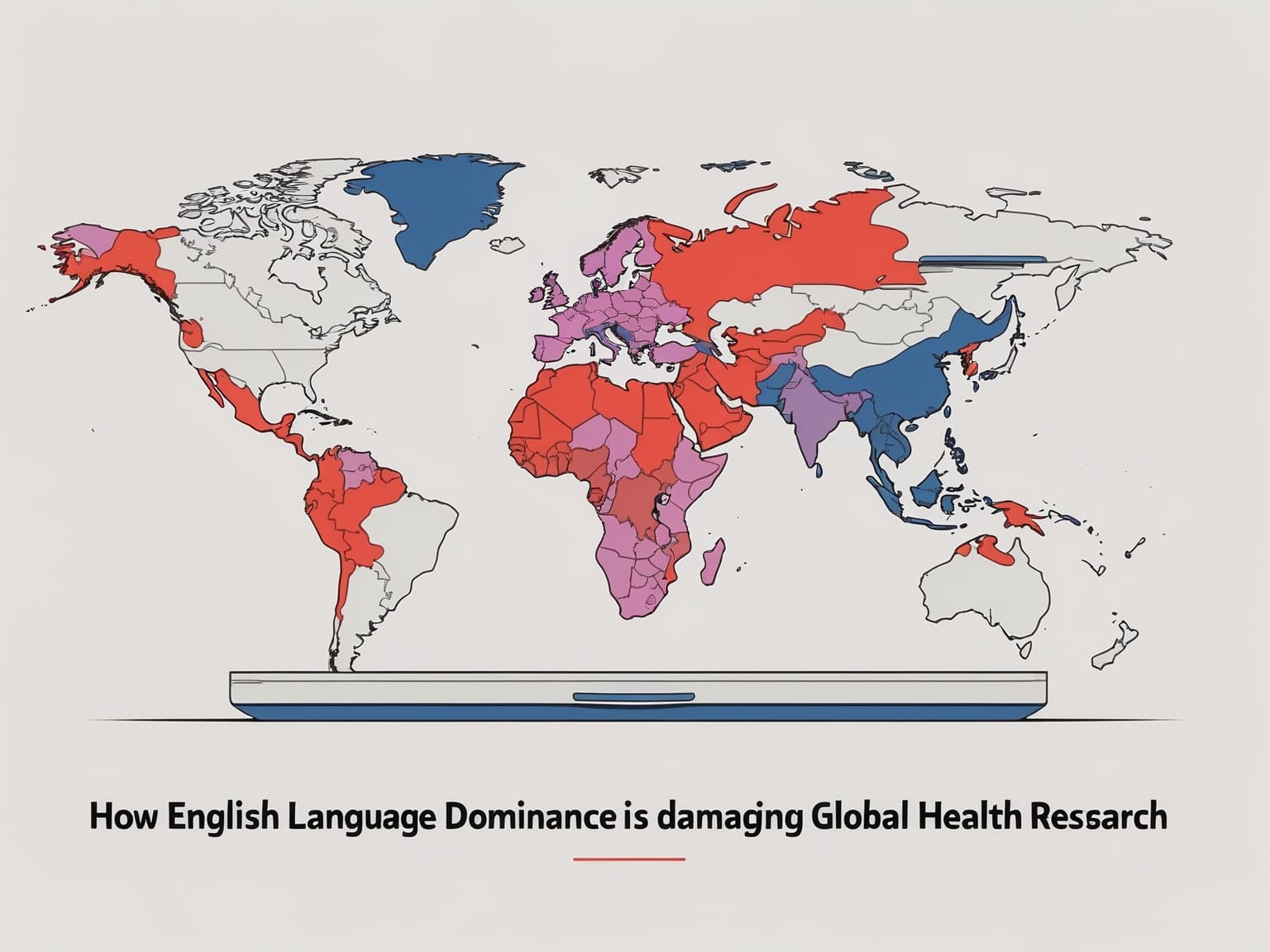
A new BMJ analysis reveals how publishing bias toward English is excluding crucial research from developing nations and limiting evidence-based medicine worldwide.
A sweeping analysis published in the British Medical Journal this week has exposed a critical flaw in how global health evidence is gathered and shared: the overwhelming dominance of English-language research is leaving vast swathes of important scientific work invisible to the world.
According to the latest research, as much as 98 per cent of scientific output is published in English, despite the world having over 7,000 languages. This linguistic dominance means that rigorous studies conducted in non-English speaking countries—particularly across Africa, South America, and Asia—often languish in obscurity, never reaching international databases or influencing clinical guidelines that affect patient care globally.
Dr Abdourahmane Ndong, an assistant professor at Gaston Berger University in Senegal, argues in the BMJ that this pattern fundamentally weakens evidence-based medicine. “Each time I engage with global health research I am reminded of how many studies never reach the global spotlight or appear in indexed databases because of the language they are written in or the journal in which they were published,” he writes.
The invisible research problemThe consequences are profound. When systematic reviews are conducted on global health issues—such as disease prevalence in specific regions or the effectiveness of interventions tailored to different health systems—researchers often miss critical data simply because it is published in non-English languages or in locally based journals not indexed by major international databases.
A 2023 study cited by Dr Ndong demonstrates the scale of the problem. Of 560 active African biomedical journals, only 96 (approximately 17 per cent) were included in at least one of the four major international databases: Web of Science, Scopus, Embase, and MEDLINE. By comparison, over 75 per cent of biomedical journals globally listed in the Directory of Open Access Journals appear in at least one major database.
Critically, this indexing gap is not due to poor research quality. As Dr Ndong notes, the under-representation of African journals frequently stems from organisational, financial, or human resource limitations rather than editorial standards. Yet the effect is the same: valuable research becomes invisible.
How language bias shapes clinical practiceThe impact extends beyond research libraries. Language restrictions actively influence which studies are cited, included in clinical practice guidelines, and ultimately used to inform global health policies. This bias is particularly damaging in areas where health systems and disease burdens vary significantly between regions. Treatment protocols developed for Western populations may not be optimal for different healthcare contexts, yet alternative approaches developed and tested elsewhere never enter the conversation.
The BMJ article highlights that current guidelines, including those from the Preferred Reporting Items for Systematic Reviews and Meta-Analyses (PRISMA)—the gold standard for systematic reviews—do not require authors to include studies in multiple languages. This creates a structural bias toward English-language research, even when researchers wish to be more inclusive.
The burden on non-native English speakersThe pressure to publish in English places particular strain on researchers from lower-income countries. Many non-native English speakers spend considerable time and resources navigating English-language publication requirements, and significant proportions report having their work rejected or substantially revised due to language issues. A survey referenced in the research found that 43.5 per cent of non-English speaking authors had experienced rejection or revision because of grammar, even when their scientific content was sound.
Meanwhile, researchers from English-speaking nations enjoy a structural advantage. Previous studies have shown that English proficiency is a stronger predictor of publication output in top medical journals than research spending itself, affecting both individual careers and the scientific standing of entire nations.
Towards greater inclusivityDr Ndong advocates for a fundamental shift in how global health research is conducted and synthesised. He describes his own approach to systematic reviews: making language restrictions optional and mandating the inclusion of at least one non-English language, translating search terms and articles using available platforms, and consulting African databases such as African Journals OnLine and African Index Medicus.
Such an approach requires more time and resources than English-only reviews, but the author argues the intellectual gain justifies the effort. As postcolonial theorist Ngũgĩ wa Thiong’o reminds us, every language “carries its own memory of the world”—a memory that matters when building truly global health evidence.
Source: @bmj_latest
Key Takeaways
- An estimated 98 per cent of scientific articles are published in English, creating a systemic bias toward research from English-speaking countries
- Research from Africa, Asia, and South America is frequently excluded from major international databases and systematic reviews, limiting global evidence-based medicine
- Language bias disadvantages non-native English speakers and entire nations, even when their research is rigorous and highly relevant to global health challenges
- Including non-English research in systematic reviews and clinical guidelines requires additional resources but captures crucial insights missed by English-only approaches
What This Means for Kent Residents
For patients across Kent and beyond, this research bias has real implications. NHS clinicians rely on systematic reviews and international guidelines to shape treatment protocols. When evidence from specific populations or health systems is systematically excluded, NHS services may not fully account for research relevant to diverse patient populations across Kent and Medway. As the NHS continues its commitment to evidence-based practice and equitable care, understanding these global research gaps becomes increasingly important. Residents seeking information about their conditions should be aware that current clinical guidance may not reflect the complete global evidence base, and discussions with their GP or NHS clinician can help contextualise treatment options within the broader research landscape.